Monday, February 06, 2006

Toddycat caught on Ubin!

A common palm civet (Paradoxurus hermaphroditus), commonly known as a Toddy Cat, was caught in a trap set by NParks on Ubin meant for other animals.


Photo by Chayhoon, taken from Ubin Volunteer Blog

It will eventually be released back into the wild.

Ubin Volunteers' blog has photos and background information about the civet cat.

Update @ 7 February 2006:
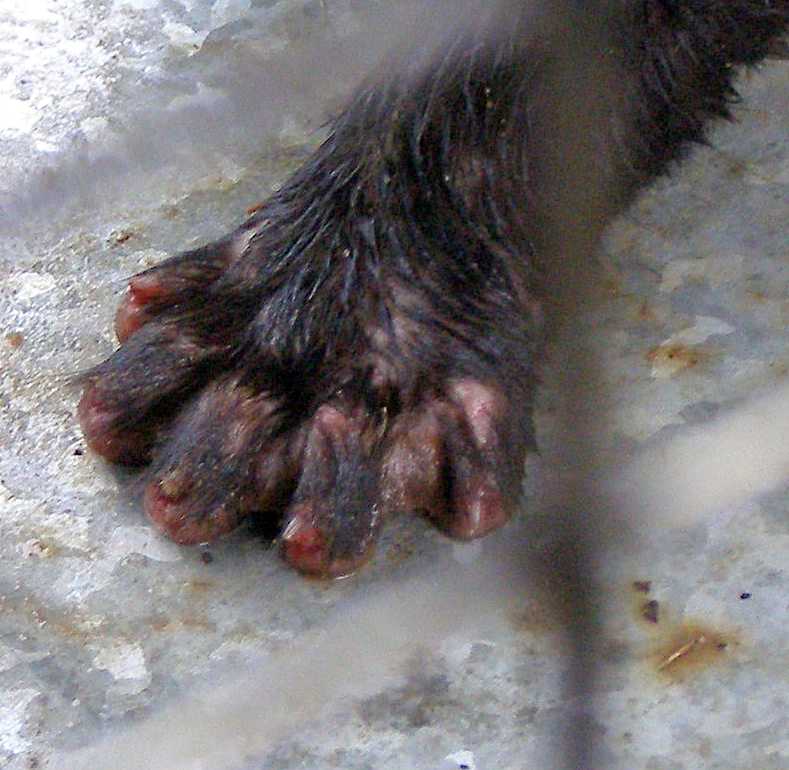
According to Oi Yee, this civet cat may possibly still be a juvenile one due to its relatively small paw size
[see photo of paw on Ubin Volunteer Blog].

Update @ 8 February 2006:
According to Chay Hoon, the photographer behind these photos, there were 2 toddycats caught in total. Chay Hoon first posted news of the Toddycats on Saturday, 4 February and the civet cats were soon released the next day on Sunday, 5 February 2006.


Related websites:
  • Ubin Volunteers - "A Banana For ???" (With more photos and information on the civet cat caught on Ubin)
  • Wildlife Singapore - Common Palm Civet Paradoxurus hermaphroditus
  • Wikipedia - Common Palm Civet
  • Raffles Museum Toddycats! - origin of our name
  • Boardwalk to get you close to nature in Ubin

    For those unaware, a broadwalk is currently being constructed at Chek Jawa and should possibly be completed in a year.

    Boardwalk to get you close to nature in Ubin
    By Alexis Hooi, Straits Times
    30 April 2005

    Walkway among features planned on island to let public enjoy nature

    RISING 3m above the ground, the 2.5km wooden boardwalk will traverse the shoreline and nature areas of Chek Jawa, home to one of Singapore's richest collections of plant and marine life.

    When completed by next year, the walkway will bring visitors up close to the inhabitants of the mudflats, mangrove forest and other habitats of the area in Pulau Ubin, without threatening them.

    The feature is part of plans, unveiled yesterday, to build new facilities to help the public enjoy Singapore's last few nature enclaves on the northern island.

    Strolling on the boardwalk, visitors will also be able to stop and appreciate more fully Chek Jawa's biodiversity, with lookout platforms, shelters and a seven-storey-high viewing tower.

    A Tudor-style English cottage there, built in the 1930s, will be restored and used as a visitor centre, with a seminar room and research facilities.

    West of Chek Jawa, 7.5ha of land - larger than 10 football fields - has been set aside as a third campsite on the island. The existing two are at Noordin and Mamam beaches in the north.

    And further west, the 14.4ha Ketam Quarry area will be used for mountain-biking activities.

    Contributing to these projects, which cost close to $10 million, is HSBC. It donated $800,000 to a fund set up to support nature conservation, outreach and research activities on the island.

    The fund will also be used for a resource centre that will coordinate and promote volunteerism in these areas.

    Touring the site of some of the projects yesterday, National Development Minister Mah Bow Tan said these efforts were an example of how Singapore needed to balance its development imperatives with safeguarding its rich natural heritage.

    He said: 'Our approach has always been... pragmatism. Conserve as much as possible, but bearing in mind that we have to cater to our economic development.'

    Mr Mah cited Chek Jawa as a prime example of how Singapore could strike that balance - reclamation plans were put on hold four years ago to conserve the area.

    At the same time, he said, more was needed to develop new parks and enhance existing ones for Singapore to realise the vision of becoming a 'City in a Garden'.

    Such moves include linking up major parks and nature sites to form a 'green necklace', and enhancing greenery along streets.

    Mr Mah also stressed the importance of a public, private and people partnership in such a vision.

    Addressing concerns on how the new features could increase visitors but threaten Chek Jawa's ecosystem, Mr Mah said it was a way to accommodate as many visitors as possible while also protecting the area.

    'I hope the visitors who come will enjoy Chek Jawa without destroying it, loving it to death as it were.'

    (c) 2005 Singapore Press Holdings Limited

    Friday, February 03, 2006

    The Ubin adventure begins

    In more recent news, just last year, the government again mentions possibility of opening up the quarries on Ubin for recreation. In fact, "the bid to develop the island starts with a $7 million project at Chek Jawa". One wonders which is the greater evil - utilizing development as a method of conservation or no development at all and allowing places on the island to become dilapitated and eventually forgotten.

    The Ubin adventure begins
    30 April 2005, TODAY
    By Jasmine Yin

    AS one of the rare rustic areas in a built-up Singapore, Pulau Ubin has the potential to be a popular destination for nature and adventure lovers.

    The vote of confidence came from National Development Minister Mah Bow Tan, who launched the Pulau Ubin Conservation and Management Plans on the island on Friday.

    About 300,000 people visited the island last year, which the minister said was "quite amazing".

    "Pulau Ubin has the potential (to attract) more visitors. It is one of our last rustic spots, very good for adventure-seekers and mountain-bikers and later on, (if we) open up the quarries, there will be other adventure sports that we can organise here," he said.

    The emphasis will be on attracting Singaporeans, but no target figure has been set.

    The island "cannot support that many more visitors, but it will do what it can to give visitors a different kind of experience", Mr Mah said.

    The bid to develop the island starts with a $7 million project at Chek Jawa Wetland, a popular attraction on the island.

    A 2.5km-long, 2.2m-wide boardwalk cum trail will be built over land and sea at the ecologically-rich mangrove swamp. It will also have lookout platforms and shelters for the public to enjoy the area's biodiversity.

    Assuring nature lovers that the construction of the trail - to be completed by the end of next year - will not adversely affect the area's ecosystem, National Parks Board chairman Professor Leo Tan said: "We have already done an environmental impact assessment, so that we build with minimal damage to the environment. Once the boardwalks are constructed, many people can enjoy Chek Jawa without trampling on the sensitive marine environment."

    Other developments in the pipeline include a 7.5-hectare campsite in Jelutong, a 14.4-hectare bike park at Ketam Quarry and the conversion of a Tudor-styled English cottage into a visitor centre.

    To promote conservation on Pulau Ubin, the Hong Kong and Shanghai Banking Corporation (HSBC) yesterday donated $800,000 to set up the Pulau Ubin Conservation Fund. Of this, $250,000 will go into setting up the Ubin-HSBC Volunteer Hub, a one-stop information centre to promote and facilitate nature volunteerism and outreach programmes.

    (c) 2005. MediaCorp Press Ltd.

    ----
    Related News:
  • Going off the cliff 13 September 2005, Straits Times
  • Pulau Ubin hosts cliff-diving demonstration to promote sport 12 September 2005, ChannelNewsAsia
  • Pulau Ubin Conservation and Management Plans 29 April 2005, NParks/HSBC Joint media release
  • Govt to develop Ubin quarry into recreational park 13 January 1998, Business Times Singapore
  • Saturday, January 28, 2006

    Govt to develop Ubin quarry into recreational park

    There has always been queries as to whether the quarries on Ubin could be open for recreation since they are all fenced up and out of bounds. This 1998 article shed some light on the possible plans the government has for the island in the future.

    Govt to develop Ubin quarry into recreational park.
    13 January 1998
    Business Times Singapore

    THE government is acquiring a granite quarry on Pulau Ubin for an outdoor recreation park on the island.

    Responding to BT queries, the Ministry of Law said: "The government has no plans to tender out the site to private developers". But it said that the National Parks Board would be developing outdoor entertainment in keeping with the rustic setting of Pulau Ubin instead.

    This puts an end to speculation that the site, which is 36.9 hectares or almost four million sq ft in size, would house a large theme-park type development. The National Parks Board will be developing an outdoor recreation and adventure park on the site.

    The quantum of compensation to be paid out to the quarry's owner-operator Aik Hwa Trading Company for the acquisition will be determined by the Land Office, after it has received claims for compensation from the company.

    With the acquisition, which was announced in the Dec 26 issue of the government gazette, vacant possession of the site is expected by the end of March.

    In May 1996, Minister for National Development Lim Hng Kiang announced that the government had plans for half of Pulau Ubin, or 500 ha of the island, to be turned into a recreational centre with a rural and natural setting.

    The private sector is to have a hand in running the facilities, which would include sites for biking, hiking and camping with lookout points for bird watchers.

    Already, the government, through the National Parks Board, has awarded two 15-year leasehold Ubin sites in private tenders.

    The larger of the plots awarded last year is being turned into a mini-resort with chalets for up to 350 visitors.

    Called the Ubin Lagoon Resort, the S$22 million project is being built by joint venture partners Alliance Technology and Development Ltd and Fort Canning Country Club Investment Ltd.

    Another smaller plot of land of 2.6 ha was awarded to real estate developer Powerland Holdings Ltd, for a sum of S$3.3 million.

    (c) 1998 Singapore Press Holdings Limited

    Down memory lane

    On this eve of the Lunar New Year, let us revisit Ubin through the memories of some residents. The below article was written by the Oral History Department of the National Archives in 1990. It compiled the oral history records of interviews with ubin islanders. Note the outdated context of the article as there were still active quarries on the island in 1990 but all quarry activities were ceased upon government acquisition in 1998.

    Enjoy the article and Happy Lunar New Year!


    Pulau Ubin


    Pulau Ubin, undated. Source: Oral History Department

    Travelling north from Changi after a 10-minute boat-ride, one reaches Pulau Ubin, one of the major suppliers of granite for the building industry. According to history sources, he quarry was discovered before 1848, and up to today, has provided job opportunities for the residents. The majority of the Chinese residents are Hakkas, followed by the Hokkiens and Teochews. Eighty-two year old resident Lim Chye Joo came to Pulau Ubin to seek his relative in 1935. This was what he said about work in Pulau Ubin then:

    About 70% of them found jobs in the quarry, the rest of them were poultry farmers, fishermen or hawkers. The Hakkas formed the majority and they were quarry workers. They stayed in the small pockets of farm land and dealt in some petty trade. The population was scattered. The ones with spouses lived in wooden huts. In those days, it was easy to build a house at any place you fancied. They could also grow vegetables and rear poultry to earn some side income. There are also petty traders at the kang-kar. Kang-kar is the hub of activities in the island. (Literally translated, kang-kar meets feet of the harbor, which refers to the mouth of the river at the coast)


    Pulau Ubin has remained much the same, except for some educational and economic changes in the '70s. The younger residents prefer to find work on mainland Singapore. The are others who have abandoned everything and settled for a new way of life on the mainland. Pulau Ubin does seem much more tranquil than in her heyday. It is for this reason that it was attracted the city dwellers who want to get away from the city.

    Source:
  • Oral History Department (1990) "Pulau Ubin & Pulau Tekong" in Recollections: People and Places, Oral History Department, Singapore